Buy Uk ID card What Happens If You Get Caught...
Read MoreDriver's Licence is a private organization that products documents and services such as Uk driver’s licence Uk theory certificate Uk practical test certificate Uk CPC licence Uk HGV licence ielts certificate Uk driver’s qualification card life in the uk test certificate Irish driver’s licence Northern Ireland driving licence biometric Uk Resident permit Uk passport Uk ID card Nclex certificate PTE certificate provisional drivers licence driving lessons in London driving instructors in Uk driving examiner in Uk
Table of Contents
ToggleFake ID UK searches usually start with worry, curiosity, or pressure from friends. Some people want to get into a venue. Others want to buy age‑restricted products or gamble. Yet the legal risk is real and life changing. In this guide, you will learn what UK law says, what happens if you are caught, how venues handle suspicious documents, and how to spot fakes fast. You will also see safer legal alternatives so you can protect your future and your finances.
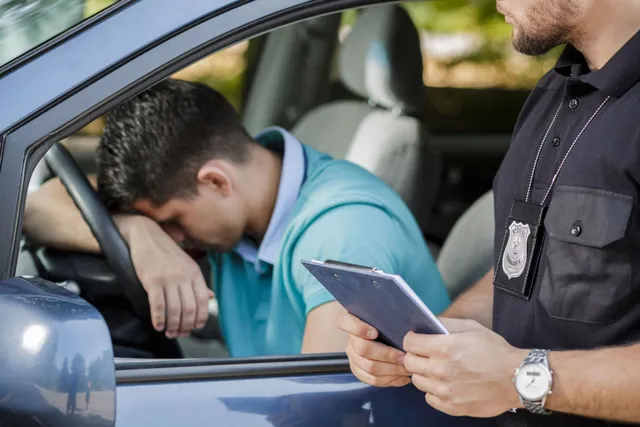
Using or buying Fake ID UK can lead to arrest, a criminal record, and long‑term employment consequences.
Bouncers can refuse entry and may retain suspected fakes to pass to the police, but they do not have special police powers.
Most “novelty” cards still create risk when used to mislead. Novelty is not a defence if deception is intended.
Businesses should train staff, adopt Challenge 25 policies, log incidents, and use a clear process for handling fake or borrowed IDs.
Legal alternatives exist. PASS‑accredited proof‑of‑age cards, valid passports, and UK driving licences remain the safest route.
Searching for any UK document online? You are here for it finally.
Whatsapp Us: +44 7769421203
Fake ID in the United Kingdom covers any document designed or used to misrepresent identity or age. It could be a counterfeit driving licence, a borrowed passport, or a made‑up card that looks official. It could also be a genuine document that has been altered. The key issue is intent. If a document is used to deceive, the law applies.
Legitimate uses are simple. Real passports and driving licences are fine when used by the rightful holder to prove age or identity. PASS‑accredited proof‑of‑age cards are legitimate too. Illegitimate use begins the moment you present a false, altered, or borrowed document to gain an advantage such as entry, alcohol, or services.
Selling Point: Choose legal proof‑of‑age options like a PASS‑accredited card or your genuine passport or driving licence. You avoid scams, wasted money, and criminal exposure.
Yes. Several UK laws address possession, making, or use of false identity documents. If you possess a false or someone else’s identity document with improper intention, that is an offence. If you use a false document to mislead a venue or retailer, that can be fraud by false representation. If you make or use a false instrument, the Forgery and Counterfeiting Act can also apply.
Novelty cards still create risk. If a card resembles official ID and you use it to persuade someone that you are older or someone else, it can be treated as a false document. It is not only the act of buying that matters. It is the act of presenting and the intention behind it.
Selling Point: If age verification is the problem, pick a legal solution. A PASS‑accredited card or your own valid passport or licence solves the need without risking a conviction.
Penalties vary by offence and circumstances. Possession with improper intention can be charged on indictment with severe sentences. Use of a fake to obtain a benefit can be treated as fraud. Police may seize the document, interview you, and refer the case for prosecution. Even a caution can complicate future background checks. A conviction can be career‑limiting for roles requiring trust or vetting.
A criminal record creates stress. It can reduce opportunities. It can be disclosed on certain background checks. It can affect professional licensing. It can stay in mind for years even if legally spent. The cost of a fake is not the purchase price. The cost is your future.
Table 1. Key UK Offences Commonly Engaged By Fake ID Use
| Offence | Primary Law | Mode Of Trial | Maximum Penalty | Typical Scenario |
|---|---|---|---|---|
| Possession Of False Identity Document With Improper Intention | Identity Documents Act 2010 s.4 | Indictable | Up to 10 years’ imprisonment | Holding a false or someone else’s ID intending to use it |
| Possession Of False Identity Document Without Reasonable Excuse | Identity Documents Act 2010 s.6 | Either way | Custody and/or fine | Found with a false or altered document without good reason |
| Fraud By False Representation | Fraud Act 2006 s.2 | Either way | Up to 10 years’ imprisonment | Presenting fake ID to obtain alcohol, entry, or services |
| Using A False Instrument | Forgery And Counterfeiting Act 1981 s.3 | Either way | Up to 10 years’ imprisonment | Using a counterfeit licence or passport to deceive |
Searching for any UK document online? You are here for it finally.
Whatsapp Us: +44 7769421203
Door supervisors can refuse entry. They can examine ID that you voluntarily present. They are often advised to retain suspected fake or borrowed ID, complete a record, and pass it to the police or the issuing authority. However, an SIA licence does not grant police powers. Venues should follow local police or licensing guidance and keep a clear audit trail.
In practice, good venues act fairly. Staff explain why they are concerned. They record the incident in an incident log. They pass the item to the police or the issuing body rather than keep it indefinitely. You can ask for a receipt when a document is retained. It may be returned by police if it is later verified as genuine.
If your genuine ID is held by a venue:
Ask for the manager and request a written receipt with date, time, and staff names.
Provide contact details so the police can reach you.
Follow up with the local police station to confirm the process.
Keep calm. Clear communication often speeds resolution.
This is where we draw a firm line. Advice that helps someone obtain or use a fake ID or evade detection is illegal and unsafe. It would put you at risk. It would also be irresponsible to provide. Your best move is to avoid fake ID entirely and switch to legal, accessible options.
Safer Legal Alternatives:
Apply for a PASS‑accredited proof‑of‑age card if you do not have a passport or driving licence.
Replace lost or stolen legitimate documents through the proper authorities.
For venues, implement Challenge 25, train staff, and use lawful verification tools rather than guesswork.
Selling Point: Protect your future. A legal proof‑of‑age card is inexpensive, fast to obtain, and widely accepted. No criminal risk. No stress.
There is no safe or legal way to buy a fake ID. “Top suppliers” claims are bait. Many sites take your money and never deliver. Others deliver poor counterfeits that are spotted within seconds. Worse, sending personal details and photos to criminals invites identity theft. People lose money. People lose control of their data. People end up in police interviews.
If you need proof of age:
Use a PASS‑accredited card, your passport, or your driving licence.
If your document is lost, report it and request an official replacement.
If a site offers “novelty” licences, avoid it. Novelty that looks official causes legal trouble when used.
Scam Red Flags To Avoid Losing Money:
Claims that “our IDs pass scanners” or “undetectable hologram”.
Requests for cryptocurrency only.
Pressure messages that “UK customs guaranteed”.
No physical address or mismatched company details.
Stock photos and spelling mistakes on the card previews.
Technically, modern UK documents are engineered to defeat home attempts. Legally, attempting to make a fake ID can lead to very serious charges. Real licences and passports use optically variable inks, tactile engraving, microprint, and features that react to ultraviolet light. Production requires specialized materials and equipment that consumers cannot lawfully obtain. If an at‑home attempt looks passable on a phone screen, it usually fails under basic inspection in real life.
So the honest answer is simple. It is not legal. It is not safe. It is not worth the risk. The time you would spend chasing a counterfeit is better spent applying for a legal proof‑of‑age document.
Quick checks help staff and landlords make fast, fair decisions. They also protect legitimate customers by keeping queues moving. Start with the face, then the feel, then the features. Small, consistent checks beat guesswork every time.
Look for these quick signs:
Mismatch between face and photo. Age, hairline, eye spacing, and jaw shape should be consistent.
Tactile elements. Run a fingertip across the raised surname and other tactile areas on a licence. Cheap fakes feel flat.
Hologram behaviour. Tilt the card. Legitimate holograms move or change in precise ways. Static foils are a warning.
Microprint and fine lines. Blurry lines, smudges, or broken microtext signal poor reproduction.
Fonts and spacing. Genuine documents use consistent fonts, letter height, and spacing. Misaligned type is a red flag.
Edges and laminate. Lifting edges, bubbles, or cloudy film suggest tampering.
Back‑of‑card details. Barcodes and codes should be crisp and consistent with the front data.
Searching for any UK document online? You are here for it finally.
Whatsapp Us: +44 7769421203
UK photocard driving licences include layered security that can be checked without tools. Features vary by issue date, but several remain consistent. Staff should learn how each feature behaves when the card is tilted, touched, or viewed under UV.
Table 2. UK Driving Licence Security Features You Can Check At The Door
| Feature | Where It Is | Quick Real‑World Check | Why It Matters |
|---|---|---|---|
| Holographic Steering Wheel Motif | Front of card over the photo area | Tilt the card. The steering wheel and elements should shift in a controlled way | Random foils do not replicate precise movement |
| Tactile Engraving On Surname And Categories | Front, around bottom left of photo and surname | Run a fingertip. Raised text should be clearly felt | Inkjet prints feel smooth and flat |
| Optically Variable Ink (OVI) | Symbols or text that change appearance | Tilt and observe colour or sheen change | Home printers cannot mimic OVI behaviour |
| Microprint And Fine Guilloché Lines | Background patterns and borders | Use good lighting. Lines should be crisp, not mushy | Low‑resolution fakes blur under inspection |
| UV‑Reactive Elements | Various motifs only visible under UV | Under genuine UV light, true features glow in a specific, not blazing, way | Many fakes fluoresce too brightly |
| Personalized Optical Effects | Elements that reveal or change with tilt | Check for changing characters tied to the holder’s data | Personalization is hard to counterfeit consistently |
Security layers work together. The licence is designed to be held, tilted, and felt. It is designed to catch the eye if anything is off. If the hologram movement is wrong, or the raised printing is missing, or the microprint looks fuzzy, the safest choice is to decline the sale or entry and follow your policy.
For managers, brief refreshers help. It is useful to keep a simple one‑page crib sheet behind the bar or at reception. It is useful to practice with genuine, expired samples so staff can feel the difference. It is useful to pair human inspection with responsible use of technology where appropriate.
Alteration is different from full counterfeiting. A borrower might swap a photo. A forger might lift laminate and change a digit. Many tampering attempts leave scars when viewed in good light. Look for ripples near the photo. Look for inconsistent gloss across the card. Look for tiny white edges where a new photo was trimmed. Look for misaligned shadows under the portrait.
Use a simple step‑by‑step approach:
Compare the nose, ears, and eye spacing with the portrait. These do not change as easily as hair or makeup.
Check the date of birth formatting and spacing. Altered numbers often sit too high or too low.
Inspect the laminate around the photo and date fields. Lifting or re‑lamination leaves texture changes.
Feel for raised text. Tactile areas should be continuous and clean, not rough or sanded.
Cross‑check back‑of‑card codes with front‑of‑card data for obvious contradictions.
Age checks protect young people from harm and protect businesses from penalties. Underage drinking creates health and safety risks. Underage gambling harms finances and mental health. Retailers and venues have legal duties to prevent sales where proof of age is not established. Therefore, a solid verification policy is not optional. It is essential.
For customers, legitimate proof of age reduces friction. Queues move faster. Door teams feel confident. Disputes decline. For businesses, strong policies reduce test‑purchase failures and uphold licensing objectives. Everyone wins when the process is clear and fair.
A calm, consistent process helps staff make the right call. It also protects the venue when decisions are later questioned. The process should be trained, documented, and practiced. Staff should know exactly what to say and do.
Recommended steps for businesses:
Adopt Challenge 25. Ask for proof of age if the customer looks under 25.
Train For Visual And Tactile Checks. Practice with real samples so staff can feel features.
Refuse Politely When Unsure. A simple refusal is faster than a long argument.
Retain Suspected Fake Or Borrowed IDs For Police. Use a receipt or bailment form, record staff names, time, and reason.
Log Every Incident. Keep an incident book. Note details consistently.
Hand To Police Or Send To Issuing Authority. Do not keep fakes in a drawer.
Review Patterns. If repeat attempts occur, adjust staffing, lighting, or entry flow.
Use Approved Tech To Assist, Not Replace, Human Checks. Scanners help, but the final decision should be made by a trained person.

The term “how much is a fake ID UK” is commonly searched by people trying to understand the cost involved in purchasing forged identification. Prices typically range from £50 to £200 depending on the quality, supplier reputation, and security features included. However, buying any how much is a fake ID UK product can lead to financial loss, scams, or even legal prosecution under UK fraud laws, making it a risky investment.
Many search “novelty IDs” thinking they are harmless props, but even novelty-style cards can be illegal if they imitate official government IDs too closely. While some novelty IDs are marketed for entertainment, misuse or intent to deceive (e.g. gaining access to age-restricted venues) could lead to criminal penalties for possession or use in the United Kingdom.
Searchers frequently question whether my fake id biz websites online are trustworthy. In most cases, platforms branded as my fake id biz are unregulated, operate anonymously, and are prone to taking payments without delivering any product. Even if they do ship IDs, customers risk identity theft, counterfeit scams, and prosecution for attempting to buy unlawful identification.
People looking for fake id scotland options believe Scottish versions may be harder to trace. In reality, possession of a fake id scotland card carries the same legal consequences as any other UK region — including confiscation, fines, prosecution, and records that may affect employment or visa applications.
The phrase fake id england is popular among individuals searching for region-specific designs. While some vendors claim their fake id england versions look more realistic, the Home Office uses nationwide security standards. Any attempt to use such cards for age verification or identity proof is illegal and carries serious moral and legal repercussions.
The keyword fake online id refers to websites claiming fast digital delivery of forged IDs. Although they promise convenience, buying a fake online id leaves digital footprints, puts your personal data at risk, and often results in poor-quality or unusable IDs. Moreover, the use of such documents to bypass age or identity checks is a criminal offence in the UK.
Yes. Fake ID UK is risky to own and to carry. Even simple possession can be treated seriously when an improper intention is inferred. If the document is presented to gain entry, buy alcohol, or access services, it can be treated as fraud. Personal data risks are high as well because images and details are often sent to unverified sellers. Money can be lost. Identity can be misused. Trust can be damaged.
Main risks you should consider:
Arrest may occur if a fake or borrowed document is found with improper intention.
Interviews by police may follow. Devices may be examined.
A caution or conviction can appear on certain background checks.
University or employer disciplinary action can be triggered by misconduct.
Identity theft risk is created when photos and details are sent to criminals.
Refunds are rarely given. Poor fakes are common. Financial loss is likely.
Safer options that work:
A PASS‑accredited proof‑of‑age card can be applied for legally.
A valid passport or a legitimate UK driving licence should be used.
Lost documents should be replaced through official channels quickly.
Patience and planning should be used so that legal proof is ready before events.
Door supervisors can refuse entry. They can examine ID that you choose to present. If they reasonably suspect a fake or a borrowed document, the item may be retained for passing to police or the issuing authority. However, police powers are not held by bouncers. Force should not be used except in lawful, limited circumstances related to safety. In practice, venues are expected to record the incident, keep a clear audit trail, and hand the document to the authorities.
What usually happens:
Entry is refused while checks are carried out.
The suspected fake is retained and placed in a safe store.
An incident log is completed with date, time, and staff names.
The document is handed to police or sent to the issuing body.
What you can ask for on the spot:
A manager to be called so the situation is explained clearly.
A written receipt with date, time, reason, and staff identification.
Contact details for follow‑up with local police.
Confirmation of when and how the document will be transferred.
Good practice for venues:
Challenge 25 should be applied consistently at the door and the till.
Staff should be trained to check tactile features, holograms, and layout.
A calm script should be used to reduce conflict and keep queues moving.
Every incident should be logged and reviewed during staff briefings.
Buy Uk ID card What Happens If You Get Caught...
Read MoreJust leave a message and will get back to you immediately. Contact us Via WhatsApp